 EN
EN

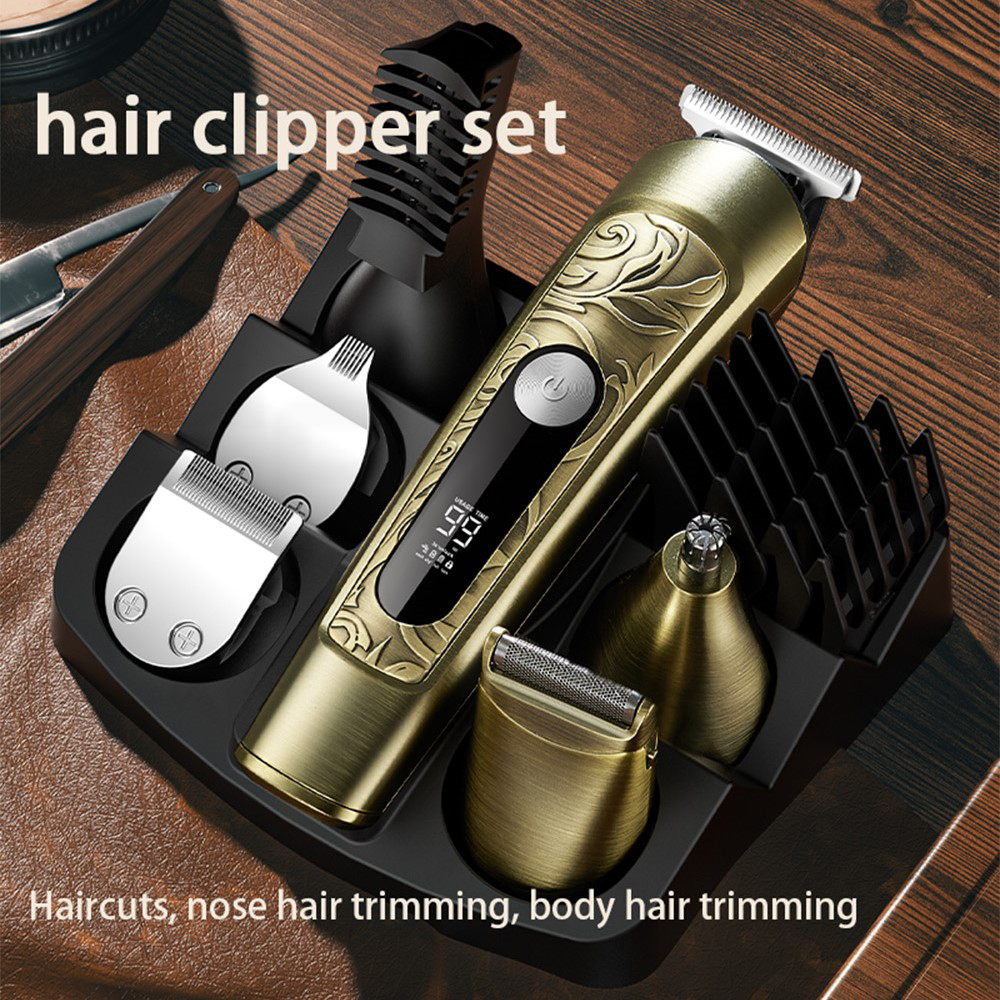
Motor Power and Blade Quality: The Foundation of a Reliable Hair Clipper Kit
Rotary vs. Pivot Motors: Impact on Cutting Precision, Heat, and Long-Term Durability
Rotary motors produce steady power through electromagnetic rotation, making them great for cutting thick or coarse hair without getting caught up. The sealed design keeps things cool when used for long periods, so these clippers tend to last about 30% longer than basic models. Pivot motors work differently, using magnetic oscillation to move blades really fast around 10,000 RPM which gives excellent control for creating fades and tapers. But there's a catch: since the parts are exposed, they get hotter faster and usually need short breaks between cuts during busy barbershop days. Homeowners might prefer pivot motors because they run quieter and feel easier to handle. Most barbers still stick with rotary versions though, especially when doing lots of cuts in one go. When shopping, look for copper wound motors in either type. They handle power changes better than aluminum ones, keeping performance stable even when electricity isn't perfect.
Blade Materials Explained: Stainless Steel, Titanium-Coated, and Cryo-Treated for Edge Retention
| Material | Edge Retention | Maintenance | Best For |
|---|---|---|---|
| Stainless Steel | 6–8 months | Weekly oiling | Budget home kits |
| Titanium-Coated | 12–18 months | Bi-monthly cleaning | Frequent home or hybrid use |
| Cryo-Treated | 24+ months | Minimal upkeep | Professional daily use |
Blades coated with titanium last about three times longer against rust compared to regular stainless steel options. These coatings also have water repelling qualities that keep moisture and hair particles from sticking around, which helps maintain sharpness and smooth movement during cuts. When blades go through cryo treatment, they get frozen solid at minus 300 degrees Fahrenheit. This process straightens out the metal's internal structure, making the edge stay sharp roughly 50% longer than untreated blades. The result? Cleaner cuts through thick or curly hair without dragging across the skin and causing irritation. Ceramic blades aren't so great despite feeling cooler when used. They tend to chip easily if bumped or dropped because of their fragile nature. For those looking for something in between, self-sharpening systems with chromium alloy blades work pretty well. Each time the blade moves over hair, it naturally refines itself a bit. And remember, blades need to be harder than 58 on the Rockwell scale to deliver consistent results whether cutting fine strands or coarse hair types.
Corded vs. Cordless Hair Clipper Kits: Balancing Power, Runtime, and Practicality
Corded Kits: Consistent Power and Zero Downtime for High-Demand Use
Corded clippers deliver uninterrupted, full-power performance—aeliminating battery anxiety entirely. This makes them indispensable in environments where reliability trumps portability:
- Professional barbershops performing 15+ cuts per day
- Users managing thick, dense, or curly hair regularly
- Anyone prioritizing peak motor torque and thermal stability
Without energy storage constraints, corded models sustain maximum blade speed and cutting force throughout extended sessions—critical for avoiding snags in resistant hair growth. Their consistent output also supports heavier-duty blade systems, including cryo-treated or titanium-coated options designed for daily wear.
Cordless Kits: Battery Life, Charging Speed, and Real-World Usability for Home and Travel
Modern cordless clippers balance mobility with performance—but only when engineered thoughtfully. Key differentiators include:
| Feature | Impact on Usability |
|---|---|
| Runtime | 60–120 minutes per charge (based on independent industry testing) |
| Charge Time | 1–8 hours depending on battery chemistry and charging circuitry |
| Battery Type | Li-Ion (faster recharge, 300–500+ cycle life) outperforms Ni-MH (shorter lifespan, slower charging) |
For home users, getting at least 90 minutes of runtime makes all the difference when doing several full haircuts or handling weekly trim jobs around the house. Travelers need to check if their device works on dual voltage (from 100 to 240 volts) since power standards vary across countries. Quick charging features matter too—something like getting 15 extra minutes after just five minutes plugged in can save a lot of hassle during trips. Cordless models definitely shine in cramped areas, while cutting outside under trees or moving between different locations throughout the day. But there's a catch—these batteries require attention. Nobody wants their clipper dying halfway through a haircut, so keeping an eye on charge levels becomes pretty important for anyone serious about staying powered up when needed.
Guard Systems and Length Control: Achieving Repeatable, Professional-Looking Cuts
Precise guard systems elevate hair clippers from basic trimmers to repeatable styling tools—aenabling millimeter-accurate length control across diverse hair types and styles.
Guard Size Guide: Converting Numbers (0–12) to Exact Millimeters and Inches
Guard numbers follow a standardized, incremental scale: each step increases length by 3.2mm (⅛ inch). This consistency allows reliable cross-brand comparisons and predictable results:
| Guard # | Millimeters | Inches |
|---|---|---|
| 0 | 1.6 | 1/16 |
| 1 | 3.2 | 1/8 |
| 3 | 9.5 | 3/8 |
| 6 | 19.0 | ¾ |
| 8 | 25.4 | 1 |
| 12 | 38.1 | 1½ |
Lower numbers support tight fades and skin-tight finishes; higher numbers preserve length for crew cuts (#4 = 12.7mm) or textured styles.
Style Mapping: How Guard Combinations Enable Fades, Buzz Cuts, and Textured Tapers
Getting professional haircuts really comes down to how guards are sequenced together rather than just picking individual guards. Take a low fade as an example. The barber will typically start with a #1 guard (about 3.2mm) at the back of the neck and work up to a #3 (around 9.5mm) along the top part of the head. This creates those smooth transitions people love so much. For buzz cuts, most barbers go with a #2 guard (6.4mm) all over since it gives that neat, manageable look without being too short. When creating textured tapers, they often use a #4 guard (12.7mm) on the crown area and switch to a #2 (6.4mm) on the sides. There's usually about a 1.5 to 2mm difference between these sections which adds nice dimension and makes the haircut stand out visually. Following this kind of careful process means clients get consistent results every time, whether they want something simple like a business appropriate cut or something more complex like a skin fade design.
Selecting the Right Hair Clipper Kit by Use Case: Home, Pro, or Self-Grooming
Your primary use case determines the optimal balance of power, portability, and durability.
- Home use: Focus on simplicity, value, and ease of maintenance. Choose kits with adjustable blades, a core set of guards (#1–#8), and quiet, well-balanced motors. Cordless models with ¥60 minutes of runtime and intuitive ergonomics suit occasional trimming and family use.
- Professional use: Prioritize sustained performance and longevity. Seek high-torque rotary motors, titanium-coated or cryo-treated blades, and build quality rated for 4+ hours of daily operation. Integrated blade cooling, robust housing, and serviceable components matter more than aesthetics.
- Self-grooming: Emphasize compactness, weight distribution, and precision features. Lightweight cordless clippers with tapered or narrow blades excel for necklines, sideburns, and detail work. Integrated vacuum systems significantly reduce post-trim cleanup—and enhance hygiene.
Ultimately, match motor type and blade material to your hair’s texture, thickness, and frequency of use. A heavy-duty rotary motor paired with cryo-treated blades is overkill for biweekly touch-ups—but essential for daily professional service.
Table of Contents
- Motor Power and Blade Quality: The Foundation of a Reliable Hair Clipper Kit
- Corded vs. Cordless Hair Clipper Kits: Balancing Power, Runtime, and Practicality
- Guard Systems and Length Control: Achieving Repeatable, Professional-Looking Cuts
- Selecting the Right Hair Clipper Kit by Use Case: Home, Pro, or Self-Grooming